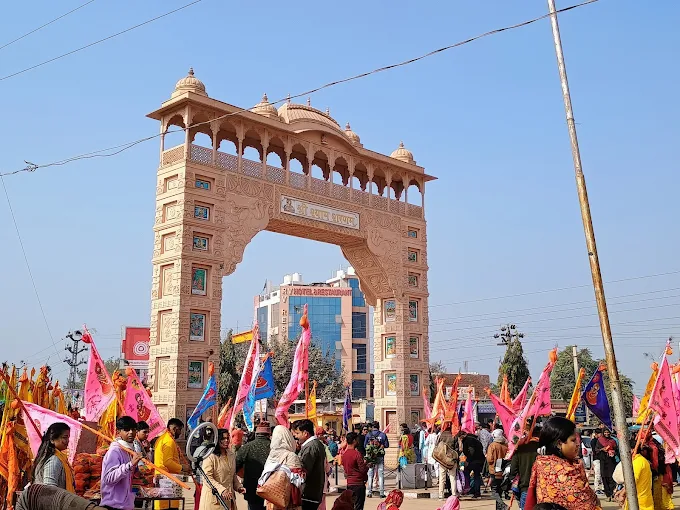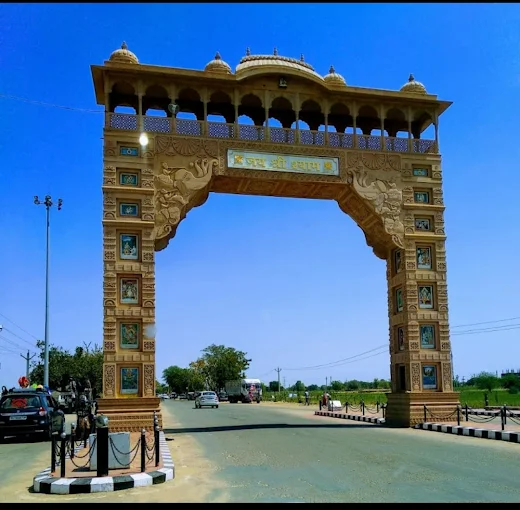
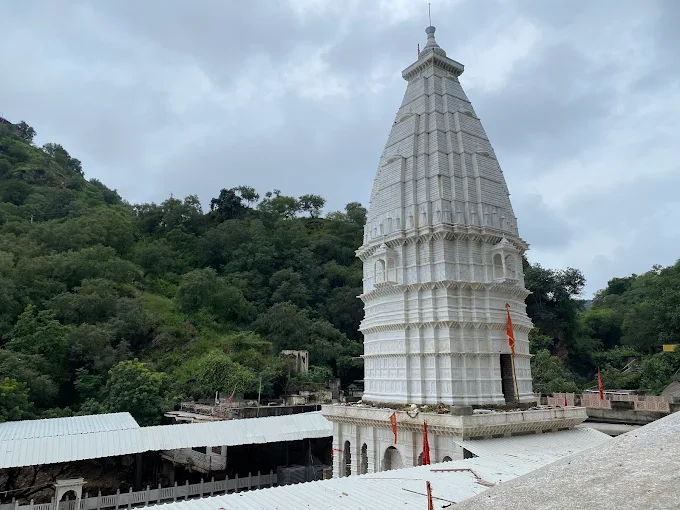
The Jeen Mata TempleClick to open side panel for more information is a deeply revered Hindu shrine located in the Aravalli hills of Sikar, Rajasthan. Dedicated to Jeen Mata, an incarnation of Goddess Durga, it is considered a powerful Shakti Peeth with a history spanning over a thousand years.
The Legend of Jeen Mata
The temple’s origin is tied to a poignant story of sibling devotion between Jeen and her brother Harsh.
- Renunciation: After a misunderstanding with her sister-in-law regarding her brother’s affection, Jeen left home to perform intense penance (asceticism) on the Kajal Shikhar hill.
- Harsh’s Transformation: When Harsh went to bring her back, she refused, leading him to also join her in meditation. He is now worshipped as Harsh Bhairav Nath at a nearby hilltop temple.
- Bhanwaron ki Devi: Legend says that when the Mughal Emperor Aurangzeb tried to destroy the temple, a swarm of massive bees attacked his army. This earned the Goddess the name “Goddess of the Bees.”
Architectural Style and Features
The temple is a fine example of traditional Rajasthani and Rajputana architecture, built primarily with marble and limestone.
- Engraved Pillars: The main prayer hall (Sabhamandapa) is supported by 24 beautifully carved pillars depicting various deities, dancers, and floral motifs.
- The Deity: The inner sanctum houses an eight-armed black stone statue of the Goddess, adorned in traditional red veils and flowers.
- The Akhand Jyoti: A holy eternal flame burns continuously in the sanctum. Historically, it is said that even Aurangzeb, after witnessing the Goddess’s power, pledged to provide oil for this lamp from the Delhi court.
Rituals and Festivals
The temple is a vibrant hub of spiritual activity, especially during specific times of the year.
- Navratri Fairs: Huge fairs (Jeenmata Mela) are held twice a year during the Chaitra and Ashvin Navratri, attracting millions of devotees who offer “Nishans” (flags).
- Jadula Ceremony: Families frequently visit for the first hair-cutting ritual of newborn boys, seeking the Goddess’s lifelong protection.
- Shyam Kund: Devotees often visit the holy water spring nearby, which is believed to have curative properties.